



Up to 313 injection-free days per year

No refrigeration for up to 6 months*

Preservative-free medication

Administer any time of day or night
Not an actual patient
* SKYTROFA cartridges can be stored at 36°F to 46°F (2°C to 8°C) in the outer carton to protect from light until the expiration date. The SKYTROFA outer carton containing blistered cartridges may be stored at room temperature (up to 86°F [30°C]) for up to 6 months and can be returned to refrigeration within the 6 months. Do not use SKYTROFA beyond the expiration date or 6 months after the date it was first removed from refrigeration (whichever is earlier).


Hear real stories from caregivers like you
Ascendis Signature Access Program® (A·S·A·P) personalized support

Insurance and financial support
Your dedicated A•S•A•P support team will help navigate your insurance plan and assist with getting financial support for qualifying commercially insured patients.

Convenient delivery straight to your home
Get the SKYTROFA Auto-Injector delivered directly to your doorstep—no pharmacy visits necessary.

SKYTROFA Auto-Injector training
Receive training on how to use the SKYTROFA Auto-Injector.
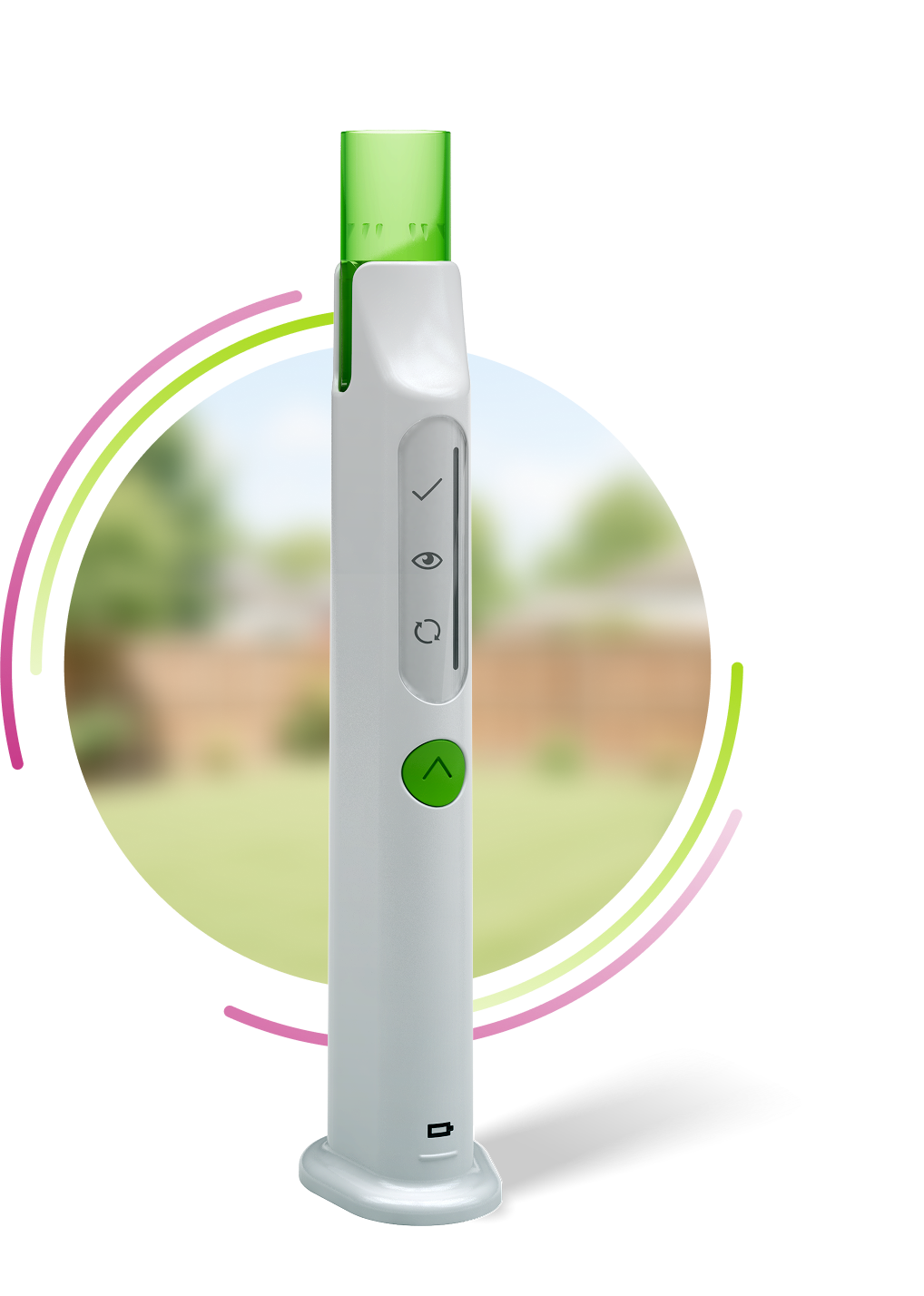
The SKYTROFA Auto-Injector
Prep, inject, and go.
The SKYTROFA Auto-Injector delivers the full dose automatically, with lights and sounds that help guide you through each step. It uses preservative-free medication cartridges that can be stored at room temperature for up to 6 months* and has a permanent needle guard, so you don’t have to worry about your child seeing the needle.
For Illustrative Purposes Only.
* Store SKYTROFA in the original package to protect from light. Do not freeze. SKYTROFA can be stored at room temperature (not to exceed 86°F [30°C]) for up to 6 months. Alternatively, SKYTROFA can be stored under refrigeration at 36°F to 46°F (2°C to 8°C) until the expiration date. If refrigerated, keep at room temperature for 15 minutes before use. Do not use SKYTROFA beyond the expiration date or 6 months after the date it was first removed from refrigeration (whichever is earlier).
IMPORTANT SAFETY INFORMATION & USES
SKYTROFA is a prescription medicine used for:
- the replacement of growth hormone in children 1 year old or older who weigh at least 26 pounds (11.5 kilograms) with growth hormone deficiency (GHD)
- the replacement of growth hormone in adults with growth hormone deficiency (GHD)
Do not take SKYTROFA if:
- you have a critical illness caused by certain types of heart or stomach surgery, trauma or breathing problems
- you are allergic to somatropin or any of the ingredients in SKYTROFA
- you are a child with closed bone growth plates
- you have cancer or other tumors
- you have certain types of eye problems caused by diabetes
- you are a child with Prader-Willi syndrome who is severely obese or has breathing problems including sleep apnea (briefly stopping breathing during sleep)
Tell your healthcare provider if you are pregnant or plan to become pregnant, about all of your medical conditions, and about all the medicines you take. SKYTROFA may affect how other medicines work, and other medicines may affect how SKYTROFA works.
What are the possible side effects of SKYTROFA?
SKYTROFA may cause serious side effects, including:
- serious allergic reactions. Get medical help right away if you have swelling of the face, mouth, tongue, or throat or trouble breathing
- high risk of death in people who have critical illnesses caused by heart or stomach surgery, trauma, or serious breathing problems
- increased risk of growth of an existing tumor or cancer, or increased risk of a previous tumor or cancer returning in people who were treated with radiation to the brain or head as children and who developed low growth hormone problems. Your healthcare provider will need to monitor for the growth or return of a tumor or cancer. Contact your healthcare provider if you start to have sudden changes in behavior, headaches, vision problems, or changes in moles, birthmarks, or skin color
- new or worsening high blood sugar or diabetes. Your blood sugar may need to be monitored during treatment with SKYTROFA
- increase in pressure in the skull. Contact your healthcare provider if headaches, eye problems, nausea, or vomiting occur
- too much fluid in the body (fluid retention). Contact your healthcare provider if you notice swelling in the hands and feet, pain in the joints or muscles, or nerve problems that cause pain, burning or tingling in the hands, arms, legs, and feet
- decrease in a hormone called cortisol. Your healthcare provider will do blood tests to check your cortisol levels
- decrease in thyroid hormone levels. Decreased thyroid hormone levels may affect how well SKYTROFA works. Your healthcare provider will do blood tests to check your thyroid hormone levels
- hip and knee pain or a limp in children (slipped capital femoral epiphysis). This may lead to a serious condition where bone tissue dies due to a lack of blood supply (osteonecrosis). Get medical help right away for children who develop a limp or have hip or knee pain
- worsening of curvature of the spine in children (scoliosis)
- severe and constant abdominal pain. This could be a sign of pancreatitis. Tell your healthcare provider about any new abdominal pain
- loss of fat and tissue weakness in the area of skin you or your child inject. Talk to your healthcare provider about rotating the areas where SKYTROFA is injected
- high risk of sudden death in children with Prader-Willi syndrome who are severely obese or have breathing problems, including sleep apnea
- increase in phosphate, alkaline phosphatase, and parathyroid hormone levels in your blood. Your healthcare provider will do blood tests to check this
The most common side effects of SKYTROFA in children include: viral infection, fever, cough, nausea and vomiting, bleeding, diarrhea, stomach area pain, joint pain and arthritis
The most common side effects of SKYTROFA in adults include: swelling due to fluid build-up and low thyroid hormone
These are not all of the possible side effects of SKYTROFA. Call your doctor for medical advice about side effects. You are encouraged to report side effects to FDA at 1-800-FDA-1088 or at www.fda.gov/medwatch. You may also report side effects to Ascendis Pharma at 1-844-442-7236.
Please click here for SKYTROFA full Prescribing Information.
Loading video...
close


You are about to leave the Skytrofa.com website by opening a new webpage to a third-party website.
The site you are linking to is not controlled by Ascendis Pharma, and we are not responsible for the content presented on that site. Thank you for visiting Skytrofa.com.
Thank you for registering!
Stay connected with SKYTROFA
Sign up to receive the latest news, resources, and information.
*Required Fields